







The loss of a tooth may be beyond just a mere nuisance. Perhaps you have some difficulties eating your favorite food, or perhaps you feel embarrassed about smiling in pictures. Another thing that can help is dentures, which tend to slip, need glues and do not entirely replace the natural functioning of your teeth. Losing teeth or having dental issues do not only make you look bad but also affects your self-esteem, health, and general life.
These novel restorations are long lasting substitutes for missing teeth and have both aesthetic and functional advantages. Dental implants do not cause any temporary solutions as they are meant to blend into your jawbone giving a long lasting, natural-feeling solution that can last a lifetime.
What Are Dental Implants?
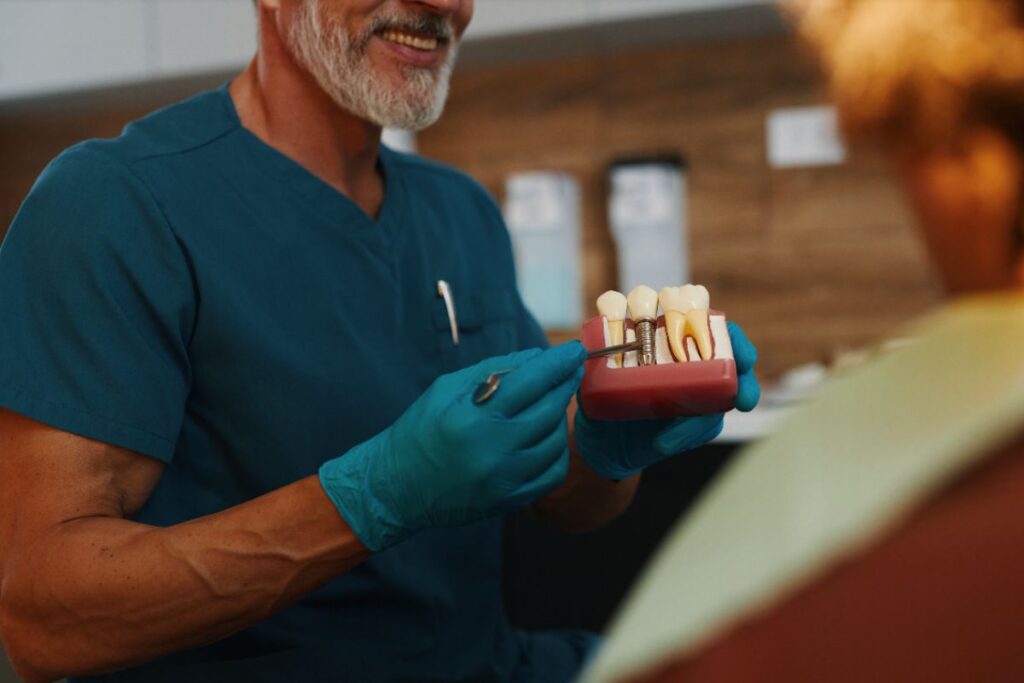
Dental implants are artificial teeth permanently embedded in the jawbone as artificial roots. Implants do not have to be supported on gums or by neighboring teeth as is the case with dentures or bridges hence give the crowns a stable platform and appear, feel, and behave like natural teeth. They are deemed as one of the best long term solutions to the loss of teeth.
How Implants Differ from Dentures and Bridges
Dentures: Dentures are removable and can be slippery and dependent upon adhesives or suction. They are able to complicate eating and speaking.
Bridges: Bridges are permanent, but they use the adjacent healthy teeth to support them and have to be ground down, which can lead to the weakening of the bridges in time.
Implants: Dental implants, however, do not have an impact on the nearby teeth, feel and work like natural teeth and maintain the jawbone mass, which avoids bone loss, which is common with harmful effects of losing teeth.
A Brief History and Modern Advancements
The idea of dental implants may appear to be new, yet the idea is an ancient one and has existed for thousands of years before. The ancient civilizations tried to substitute teeth with such materials as seashells and metal. The present day dental implants are the result of a highly developed materials science and surgery. The implant technology that had been pioneered in the 1960s with titanium implants, which have proven successful in replacing teeth, has led to the fact that the process is safer, predictive and more commonly available to a large number of people.
Common Dental Issues That Implants Address
Dental implants are not only a matter of beauty but also a matter of life and death issues that people face in everyday life due to loss or destruction of teeth. The following are some of the most prevalent problems in the teeth that are resolved effectively by implants:
Tooth Loss Due to Decay, Injury, or Gum Disease
The loss of a tooth may occur due to a number of reasons which may include; aggressive tooth decay, traumatic injuries or advanced periodontal disease. Loss of teeth does not only impact your smile, but it can also make daily chores of chewing and talking hard. Dental implants provide a natural looking permanent solution to these lost teeth to give back both functionality and self-esteem.
Difficulty Eating or Speaking
Loss of teeth may complicate the process of biting, chewing, or even pronunciation of some words. Dentures may be useful, but they tend to slip or need some adhesives. Implants are used like teeth and you have complete control to give your favorite foods and talk without apprehension of losing grip and pain.
Jawbone Deterioration from Long-Term Tooth Loss
The loss of a tooth may cause the loss of bone, face and deterioration of the jawbone in the long run, and subsequent tooth problems. Dental implants activate the jawbone just like natural teeth, and thus. They do not deteriorate, not causing the facial structure to be reduced.
Gaps, Misalignment, or Facial Sagging
The loss of just one tooth can affect the way your smile looks, may make the other teeth move, and may add to an older look because your face is slack. These gaps are filled by dental implants in a natural manner and aid in keeping the alignment straight and regaining a young and balanced appearance.
Dental implants can solve a number of issues, both functional and aesthetic, which can be considered a holistic solution to this issue, not only in the short term solutions but also in restoring not only their teeth, but also confidence and quality of life.
Benefits of Permanent Dental Implants
Dental implants are not merely substitutes for missing teeth, but a long term investment in your oral health, functionality and self-esteem. This is the reason they shine when used to address concerns of the teeth:
Feels and Works Like Natural Teeth
Other types of dentures may be able to slip, and other types are bridges which depend on the surrounding teeth, but with an implant, it is as if you have your own teeth. They enable you to chew easily, talk well and appreciate all the things you do in life without worrying about any movements or any form of uneasiness. Some dentists perform teeth whitening procedures to give a natural look to your teeth.
A Long-Lasting Solution
Dental implants have a lifespan that can be several decades- in most cases, a lifetime. In contrast to the replacement of dentures and braces, which are likely to require 5-10 years of use, implants are a permanent solution that prevents the loss of time and money that would be spent on their replacement.
Protects Your Jaw
The loss of teeth may result in the loss of jawbone in the long run leading to a sinking of the face as well as additional dental problems. Denver dental implants also encourage the bone similar to natural teeth in that they do not lead to bone loss to preserve the form of your face.
Restores Your Smile
The implants are made specifically to look like your natural teeth in terms of color, shape and size so that you have a perfect, smooth, beautiful smile. They fill wrinkles and make them look in the right direction and add to a young and self-confident look.
Hassle-Free Everyday Life
Compared to dentures, implants are permanent and do not have to be adhesives and cleaning to take them off. They automatically become part of your mouth thus enabling you to live without additional maintenance or fear of slipping.
Smile Without Worry
Dental implants can greatly enhance self-esteem by restoring its functionality and beauty. You are able to eat, speak and even smile in a social or professional environment without any problems, instilling in you the confidence to live life to its fullest without the worry that you are hiding your teeth.
The Implant Procedure
The idea of obtaining a dental implant can be confusing, but it can be approached in a much more relaxed way by knowing the process involved. The following is what is expected:
Initial Consultation and Assessment
The initial procedure is the complete dental check-up. Your dentist will scan your mouth, X-rays or a 3D scan, and will talk to you about your medical history. This will assist in deciding whether you will be a good candidate to have implants and it will also show what preparatory procedures could be required.
Preparing the Jawbone (Bone Grafts if Needed)
Other patients can lack the density of their jawbones to sustain an implant. A bone graft may be done to make the area stronger in such instances. This provides a stable base of the implant and prevents the future development of complications.
Implant Placement Process
When your jaw is prepared the titanium post (the implant) is implanted in the jawbone. This will be a replacement root of the lost tooth. The surgery is usually performed with local anesthesia and therefore you are not supposed to experience pain during the operation.
Healing and Osseointegration
Once the procedure ends, the implant requires time to integrate with the jawbone in a process known as osseointegration. This guarantees a stable and permanent constituent of your mouth. It may take several months to heal, and it is based on the fact that it depends on the bone density and the general health.
Abutment and Crown Placement
After the implant has carefully been fixed to the bone, an abutment is fitted. This little piece of connector connects the connector to the crown which is the visible part of the tooth. The restoration is completed by custom making the crown, which fits into your natural teeth in color and shape.
Typical Timeline from Consultation to Final Restoration
The average time between the first visit to the last crown is between 3 and 9 months long. The time required is different, based on the healing process, bone grafts, and case complexity.
Considerations Before Getting Implants
Dental implants are an excellent way to solve the problem of lost teeth, however, as with any medical intervention, there are several significant considerations that should be taken into account. The knowledge will contribute to the most favorable outcome.
Health Factors
General and oral health in general contribute to the success of implants. To fix the implant, there should be enough bone density to support it. Gums should also be healthy because gum disease may endanger healing. Some chronic diseases are known to influence bone healing, such as diabetes or autoimmune diseases, thus, it can be necessary to take extra precautions. These are the factors that will be assessed by your dentist in the consultation.
Cost and Insurance Coverage
Dental implants may be very expensive. Their initial cost is higher than dentures or braces although their longevity may be higher in the long-run making them more affordable. The insurance cover is not universal- there are those plans that cover part of the process, and those that might not. You need to discuss financing with your provider and check whether it is necessary.
Maintenance and Oral Hygiene Requirements
To keep the gums and bone healthy the gums and bone around the implants do not decay like natural ones, so they require some attention. To avoid infection or failure of the implants, brushing and flossing with daily use, and regularly seeing the dentist is necessary to avoid it. The lack of orthodontic care may undermine the implant and your general health.
Potential Risks or Complications
Although the procedure of implanting is quite successful, there are possible risks. These may be infection, failure of implants, nerve irritation or sinus (in upper jaw implants). The selection of a well-trained dental worker and adherence to the recommendations of post-operative care will significantly lower the risks of complications.
Conclusion
Permanent dental implant presents a sure cure to both functional and aesthetic dental problems. Not only do they regain the quality of eating, speaking and smiling comfortably, but they also keep the jawbone healthy and preserve the natural shape of your face. Offering such advantages as excellent longevity, increased confidence, and better quality of life, implants are much more than just another tooth replacement, this is an investment in your health.
When having missing teeth or a dental issue, the next thing to do is to see a dental professional and see whether an implant is the right way to handle the matter. It takes proper attention and advice so that you will be able to have a natural confident smile that will remain throughout your life. You can visit Broadway Family Dentists to get more information.
FAQs
What is a dental implant?
A dental implant is a titanium post, which is surgically attached to your jawbone, and serves as a root to a lost tooth. It is placed on top with a crown so as to resemble and perform the functions of a natural tooth.
How do you know if someone is eligible for implants?
The majority of the adults who have healthy gums and have sufficient jawbone density can be candidates. There are chronic illnesses, hardcore smokers, or bone loss, which may require extra procedures or assessments.
What is the life expectancy of dental implants?
Dental implants are one of the most long-lasting forms of tooth replacement with proper care. You can use these implants for more than 20 years.
Do dental implants hurt?
This is done under local anesthesia hence no pain should be experienced during the surgery. A certain degree of post-surgery soreness or swelling at that level is normal and momentary.
How long does the entire dental implant treatment process last?
The period may take between 3 and 9 months and it depends on the healing process, bone grafting and cases. This involves placement, healing (osseointegration) and attachment of the crown.
Will I be able to eat when I have implants?
Yes! Implants work like normal teeth once healed; therefore you can eat the majority of food with no limitations.