





A tooth that hurts when you bite can feel small at first. Then it becomes hard to chew, hard to sleep and hard to ignore.
Acute apical periodontitis is one of the most common reasons. A painful tooth suddenly needs urgent dental attention. It usually means the tissue around the tip of the tooth root has become inflamed. Bacteria or irritation inside the tooth has reached the surrounding bone and ligament.
The good news is that this condition is curable. The better news: when it is diagnosed early, many teeth can be saved.
The right treatment depends on what caused the inflammation, whether the tooth pulp is alive or infected, whether swelling is present and whether the tooth can still support a lasting restoration. This blog will explain what actually works, what does not and how to make a smart next decision without delaying care.
What Acute Apical Periodontitis Means
Acute apical periodontitis affects the tissues around the apex or tip of a tooth root. These tissues include the periodontal ligament and nearby bone. When the tooth becomes inflamed, it may feel sore, raised or painful to the touch or under pressure.
This condition often develops after the pulp inside the tooth becomes irritated, inflamed or infected. Common triggers include the following:
- Deep tooth decay
- A cracked tooth
- A failing filling or crown
- Dental trauma
- A recent dental procedure that irritated the tooth
- An untreated root canal infection
- Heavy bite pressure or grinding
- Advanced pulp inflammation
The word “acute” means the symptoms develop quickly or feel intense. It does not always mean the infection has spread. It means the tooth needs a careful diagnosis.
Acute Apical Periodontitis vs. a Dental Abscess
People often use “tooth infection,” “abscess,” and “apical periodontitis” interchangeably.
Acute apical periodontitis usually causes tenderness around the tooth root. A dental abscess involves pus, swelling and a more active infection. If the source is not treated, a tooth can move from apical inflammation to an abscess.
| What You Notice | What It May Suggest | Typical Dental Response |
| Pain when biting or tapping the tooth | Inflamed tissue around the root tip | Bite test, X-ray, pulp testing, source diagnosis |
| Lingering hot or cold sensitivity | Inflamed or damaged pulp | Evaluate for reversible vs. irreversible pulpitis |
| Constant throbbing pain | Possible nerve inflammation or infection | Urgent exam and possible root canal therapy |
| Gum swelling or a pimple near the tooth | Possible abscess or draining infection | Drainage, root canal treatment or extraction |
| Fever, facial swelling or feeling ill | Possible spreading infection | Same-day urgent care and possible antibiotics |
Symptoms You Should Not Ignore
Acute apical periodontitis often gives a clear warning. Patients experience intense pain with the pressure. Many patients describe it as “the tooth feels too tall” or “I am unable to chew on that side.”
Common symptoms include the following:
- Sharp pain during biting or chewing
- Tenderness when the tooth is touched or tapped
- A dull ache near the tooth root
- Pain that feels localized to one tooth
- Sensitivity that does not settle quickly
- Soreness after a deep cavity, filling or crown
- Swelling in the gum near the root
- A bad taste if drainage is present
Some symptoms need faster action. Consult with a licensed dentist urgently if you notice facial swelling, fever, trouble swallowing, difficulty opening your mouth or pain. It may get worse despite over-the-counter medication. These signs can point to a spreading dental infection.
Why Diagnosis Comes Before Treatment
The most effective treatment starts with identifying the exact tooth and cause. Guessing can lead to unnecessary antibiotics, incomplete treatment or a tooth that keeps flaring up.
A dental exam for acute apical periodontitis may include the following:
- Reviewing your symptoms and medical history
- Checking recent dental work or trauma
- Testing the tooth with cold, heat or electric pulp testing
- Tapping and pressing around the tooth
- Checking your bite
- Looking for gum swelling or a sinus tract
- Taking digital X-rays
- Using 3D imaging in complex cases
One practical way to understand the exam is this: the dentist is not only asking, “Which tooth hurts?” The dentist is asking, “Is the pulp healthy, inflamed, dead, infected, cracked or overloaded?”
That distinction changes the treatment plan.
The Most Effective Treatment Options
Treatment for acute apical periodontitis focuses on removing the source of inflammation and protecting the tooth from future breakdown. Pain relief matters, but pain control alone does not solve the cause.
Root Canal Therapy
Root canal treatment is often the best option when the pulp inside the tooth is infected, necrotic or irreversibly inflamed.
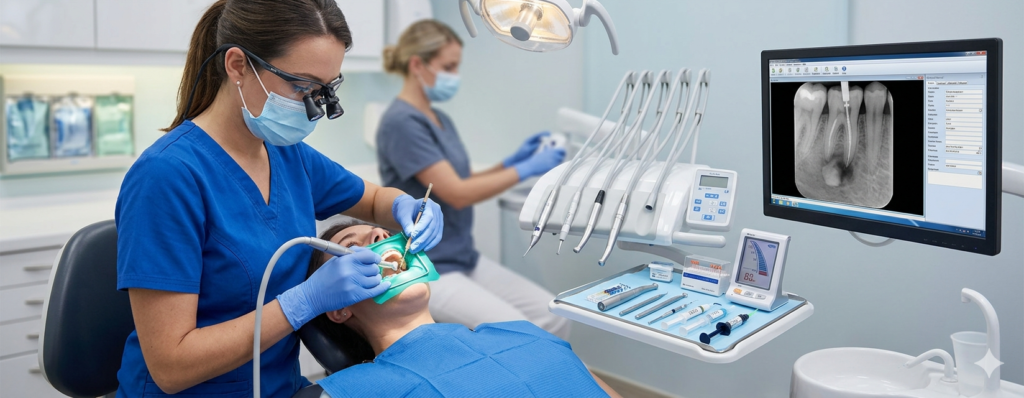
During treatment, the dentist or endodontic provider removes the damaged pulp, cleans and disinfects the canals, shapes the canal space and seals it. Once the infection source is controlled, the inflamed tissue around the root heals.
A back tooth usually needs a crown or strong restoration afterward because root canal-treated teeth can be more vulnerable to fracture. Front teeth may need a more conservative restoration depending on the amount of remaining tooth structure.
Root canal therapy is not simply a pain treatment. It is a tooth-saving procedure.
Drainage When Swelling Is Present
If pus has formed, the dentist may need to drain the infection. Drainage can happen through the tooth during root canal treatment or through a small incision in the gum when appropriate.
This step help to reduce pressure and pain. In many cases, drainage plus definitive dental treatment works better than relying on medication.
Extraction When the Tooth Cannot Be Saved
Sometimes the tooth has a vertical root fracture, severe bone loss, extensive decay below the gumline or too little structure left to restore. In these types of cases, extraction may be the more predictable and effective choice.
Extraction not feel like a failure. It is the right decision when keeping the tooth would lead to repeated pain, infection or costly retreatment.
After extraction, many patients compare replacement options, including bridges, partial dentures or Denver dental implants. The best option depends on bone support, health history, budget, timeline and cosmetic goals.
Bite Adjustment or Restoration Repair
Not every case comes from a dead or infected pulp. Sometimes the tissue around the root becomes inflamed because the tooth is taking too much force.
This can happen after:
- A new filling or crown sits slightly high
- Night grinding overloads one tooth
- A cracked cusp flexes under pressure
- Orthodontic movement creates temporary tenderness
- A worn restoration changes how teeth meet
If the pulp tests normal and the main issue is bite trauma, your dentist may adjust the bite, repair the restoration, recommend a night guard or monitor the tooth closely.
Do Antibiotics Treat Acute Apical Periodontitis?
Antibiotics can help in the right situation, but they do not replace dental treatment.
For many healthy adults with localized tooth pain and no systemic symptoms, antibiotics are not the first-line answer. The source still sits inside the tooth or around the root. Until that source is treated, symptoms may return.
A better approach is to use antibiotics only when they are clinically needed, such as when there is:
- Fever
- Cellulitis
- Spreading facial swelling
- A compromised immune system
- Malaise or feeling generally unwell
- Difficulty swallowing or opening the mouth
- A serious infection risk based on medical history
This is why a dentist may say, “You need treatment today, not just a prescription.” That can feel surprising if you expected antibiotics, but it reflects modern dental infection management.
A Practical Example
Imagine a Denver patient who notices pain in a lower molar after chewing something hard. At first, the tooth only hurts with pressure. After two days, chewing becomes impossible. Cold water does not bother the tooth much, but tapping it feels sharp pain.
During the appointment, the dentist finds an old filling with decay around the edge. The tooth does not respond normally to pulp testing. X-ray suggests inflammation near the root tip.
In this case, the most likely effective plan may be root canal therapy. Pain medicine may help temporarily. It will not remove the infected tissue inside the tooth. Antibiotics may not be necessary unless swelling or systemic symptoms develop.
Same symptom. Different cause. Different treatment.
Now imagine a second patient. A new crown feels slightly high and the tooth hurts only when biting. The pulp responds normally and the X-ray shows no infection. That patient may need a bite adjustment rather than a root canal.
What Happens During a Same-Day Dental Visit
An urgent dental visit should feel structured, not rushed. It help to relieve pain, identify risks and create a clear treatment path.
Step 1: Pain and Medical Review
Your dentist may ask when the pain started, what triggers it, whether it wakes you up and whether swelling or fever is present. Your medical history matters because some health conditions and medications affect infection risk, healing and antibiotic decisions.
Step 2: Focused Testing
The dentist checks the suspected tooth and the surrounding teeth. This matters because referred pain can fool you. A top tooth can feel like a bottom. A sinus issue can mimic dental pain. A cracked tooth can hide from a basic glance.
Step 3: Imaging
Digital X-rays help reveal decay, bone changes, root shape, previous dental work and possible abscess formation. In more complex cases, 3D imaging may help evaluate cracks, missed canals or unusual anatomy.
Step 4: Treatment Planning
The dentist explains whether the tooth likely needs root canal therapy, a restoration or repair, extraction, drainage, or monitoring. You should leave with a clear explanation, not just a prescription.
Step 5: Stabilization
Depending on the diagnosis, the dentist may start treatment the same day. They prescribe medication when appropriate and adjust the bite as needed. They can drain an infection, place a temporary restoration or refer the case to an endodontic specialist if the case is complex.
How to Decide Between Saving and Removing the Tooth
Most patients want to save their natural tooth when it makes sense. That is often the best goal. But predictability matters.
Ask these questions before deciding:
- Is the tooth restorable after treatment?
- Is there a crack extending below the gumline?
- How much healthy tooth structure remains?
- Is the surrounding bone support strong?
- Has the tooth had a previous root canal?
- Will the final crown or restoration be durable?
- What are the costs now and later?
- What happens if treatment fails?
A tooth with good structure and a treatable canal system may be an excellent candidate for root canal therapy. A tooth with a vertical root fracture or severe structural loss may be better replaced.
For patients comparing tooth-saving care with replacement options, a consultation that includes general dentistry and implant planning can clarify the decision.
What Recovery Usually Looks Like
After treatment, tenderness can take time to settle. The ligament around the tooth has become inflamed and it may remain sore for a few days even after the source is addressed.
Most patients can expect:
- Less pressure and throbbing after treatment starts
- Mild soreness when chewing for several days
- A need to avoid hard foods on the treated tooth
- Follow-up restoration after root canal therapy
- Monitoring to confirm healing over time
Consult with a licensed dentist if pain gets worse, swelling increases or the bite feels high after treatment. A small bite adjustment can make a big difference after root canal therapy or a new crown.
Common Mistakes That Delay Healing
Acute dental pain often gets worse when patients try to wait it out. The body may reduce symptoms for a while but the source can remain.
Avoid these mistakes:
- Taking leftover antibiotics without a diagnosis
- Using pain medicine to postpone care for weeks
- Chewing on the opposite side and hoping the tooth heals
- Assuming no swelling means no infection
- Ignoring a gum pimple near the tooth
- Delaying the final crown after root canal therapy
- Choosing extraction without discussing replacement timing
- Starting cosmetic work before the painful tooth is stable
One of the biggest mistakes is stopping treatment once the pain improves. Pain relief is not the same as healing. A tooth can feel better after temporary drainage or medication and still need definitive care.
Think About Appearance After Health Comes First
If the treated tooth sits in the smile zone, color and shape matter too. Once infection is controlled, options such as cosmetic dentistry, implants & veneers, or teeth whitening may help restore confidence. The sequence matters, as health first, aesthetics second.
When Technology Helps
Modern dentistry gives clinicians better ways to diagnose and treat painful teeth. Digital X-rays, magnification, rotary endodontic instruments, advanced irrigation and precise bite analysis can all improve decision-making.
In some practices, laser dentistry may support soft-tissue procedures, periodontal care or comfort-focused treatments. It does not replace proper diagnosis and it is not the main treatment for every root infection. The value comes from choosing the right tool for the right clinical situation.
If bite alignment or crowding contributes to excessive pressure on certain teeth, orthodontic care may become part of the long-term plan after the acute pain resolves.
Can Acute Apical Periodontitis Go Away on Its Own?
If pressure changes or drainage begins, symptoms temporarily subside. It does not always mean that the problem has resolved.
If the cause is minor bite trauma and the pulp is healthy, the tooth may recover after the bite is corrected. If bacteria have reached the pulp or the pulp has died, the tooth usually needs root canal therapy or extraction to remove the source of the infection.
This is why self-diagnosis is risky. The same biting pain can come from a high filling, a cracked tooth, irreversible pulpitis, pulp necrosis or a developing abscess.
Final Thoughts
Acute apical periodontitis deserves prompt, thoughtful treatment. The goal is not only to stop the pain. The goal is to identify the cause, protect your health, save the tooth when possible and prevent the problem from recurring.
The most effective care starts with a proper diagnosis and a treatment plan that matches the tooth, not a one-size-fits-all prescription. Broadway Family Dentists help people dealing with sudden tooth pain. Clear and comprehensive dental care is exactly what patients should expect.