










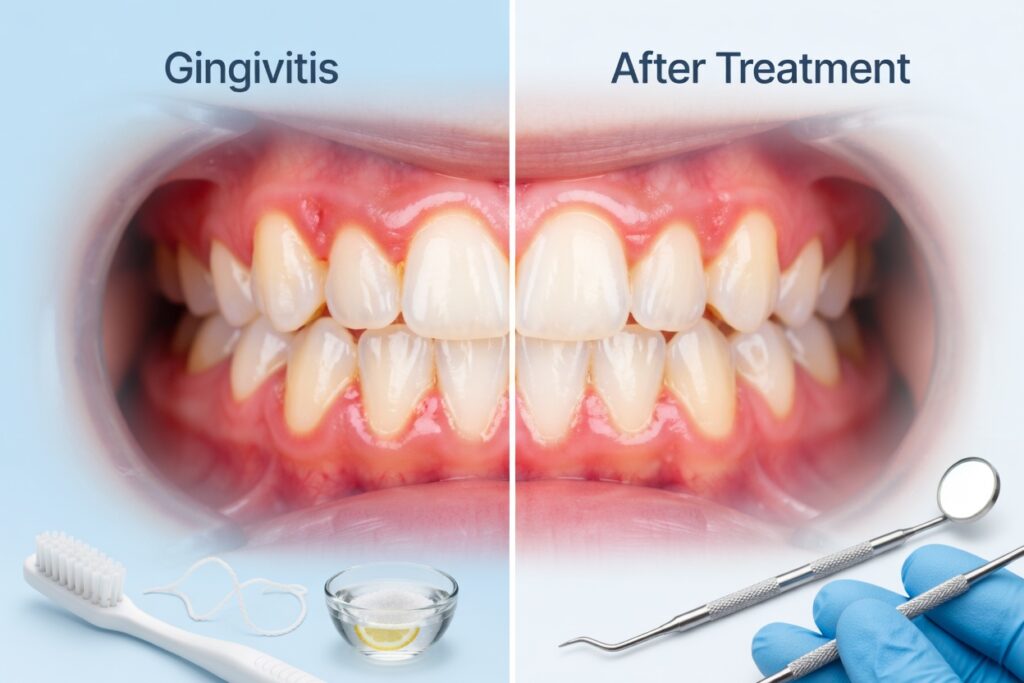
Gingivitis is a very common type of gum disease or infection. This gum infection can develop in individuals of all ages. The chances of occurrence depend on the individual’s oral care and dental hygiene. This is a disease that happens when plaque and bacteria build up on the teeth near the gum line. It leads to inflammation, redness, and bleeding in the gums. Although gingivitis is a mild, initial stage of gum infection, it can lead to more serious forms of periodontal disease, such as periodontitis, permanently damaging oral health.
How to treat gingivitis is a common concern among individuals suffering from this gum infection. You should know that simple home care remedies and professional dental treatment can both be used to treat gingivitis and help keep a healthy smile, and support general dentistry practices overall.
Understanding What Causes Gingivitis
Gingivitis result sin due to gum tissue irritation, when bacterial damages the oral lining and the gums become inflamed. The main reason for gum damage is poor oral hygiene practices. These include brushing too hard or not brushing enough. It is followed by inadequate flossing. Other factors like diet, stress, smoking, and certain medications can increase the chances of developing gingivitis.
By recognizing early signs of gingivitis, you can treat gingivitis before it becomes advanced and more difficult to treat. Never ignore signs of mild swelling of the gums or bleeding from the gums when brushing or using dental floss, as these symptoms may indicate inflammation in your gums. You should visit dental professionals to keep your gums healthy.
Recognizing the Signs of Gingivitis
Gingivitis is not usually detected until the condition is more advanced, i.e., bleeding gums when cleaning teeth, slight redness of the gum tissue, or sensitivity are some of the early symptoms of the disease. Bad breath could also indicate gingivitis and the gradual recession of the gum line.
By learning to recognize the early symptoms of gum disease, you can get timely treatment. It also reduces the chances of having restorative dental procedures such as implants and veneers in the long term. This also forms a foundation of healthy gums.
At-Home Strategies to Combat Gingivitis
Gingivitis can best be treated at home with regular routines of good oral hygiene. When gingivitis is caught early enough, daily techniques can make a noticeable difference in minimizing plaque and reversing inflammation.
With the use of appropriate techniques used at home in combination with professional help, a person can treat gingivitis by implementing a complete dental care program Also, good oral hygiene at home aids in the success of other forms of cosmetic dentistry procedures, such as Denver Dental Implants and porcelain veneers, if you have one.
Brushing and Flossing Correctly
Brushing your teeth correctly means brushing at least twice a day using a soft-bristle toothbrush. Use a gentle, circular motion for cleaning your oral environment. It will remove bacteria and minimize future irritation. For best results, use an antibacterial toothpaste to help prevent plaque build-up.
Along with brushing practices, flossing once daily is necessary. It removes the food debris and plaque from the close, small enclosures in between the teeth where a toothbrush cannot reach. By regularly flossing, you will help maintain healthy gums and reduce the possibility of inflammation. This is very important for maintaining the results of any teeth whitening and other cosmetic dental procedures.
The Role of Diet in Gum Health
Your diet can affect your oral health because the nutrients from a balanced diet can help keep your gums healthy and assist in the healing process if they are damaged. On the other hand, eating a poor diet can suppress your immune system. This will make your gums more prone to infections.
When you increase your consumption of nutrient-dense foods, like fresh fruits and vegetables, or whole grains, in your daily routine. Over the period of time, you will be able to see improvements in your gum health. Your teeth and gums will strengthen and become resistant to harmful bacteria, which will help them stay healthy longer.
Nutrients That Support Healthy Gums
Nutrients are essential in maintaining and supporting oral health, as they are important for overall health and wellness. Including these in your diet positively influences your oral well-being. Here are the two important vitamins that are essential for your dental and oral well-being. These are vitamin C and K, explained as:
- Vitamin C: It is very important to keep gum tissue healthy and to avoid gum inflammation. Citrus fruits, for example, oranges, strawberries, and leafy greens, are very good food sources of this vitamin.
- Vitamin K: This vitamin K is also very important for proper blood clotting and can help prevent excessive bleeding.
Along with these vitamins, calcium, phosphorus, and sufficient fluids are also good to have for supporting oral health and to treat gingivitis. It will ensure enough saliva production that acts as a natural defense mechanism to the oral environment. It keeps the mouth clean from bacterial accumulation. Laser dentistry can also be considered to treat gingivitis, followed by a healthy diet. It will help the gum tissues to heal effectively and treat gingivitis efficiently.
Lifestyle Habits That Protect Your Gums
Your lifestyle choices you make, can affect your gum health. Positive habits improve your oral hygiene, whereas poor hygiene habits drastically decline oral care. You can treat gingivitis by maintaining a healthy oral routine. Keep your mouth clean to reduce the risk of gum infections. Here are some important lifestyle habits you should consider while preventing gingivitis:
- Use of Cigarettes: Tobacco use is considered one of the most detrimental behaviours to a person’s gum health due to its impact on blood circulation and a person’s overall ability to fight infections. Reducing or discontinuing tobacco use can greatly improve the condition of an individual’s gums.
- Stress Coping: Managing stress levels in one’s life can also improve an individual’s gum health. When an individual has a significant amount of stress in their life, their immune system becomes weaker and is therefore less able to fight the oral bacteria present in the mouth. Maintaining a healthy lifestyle is important in supporting one’s mental health and gum health.
When to Seek Professional Care
Daily habits can help in the prevention of gum disease, but seeing your dentist regularly is necessary to treat gingivitis for your overall health and a successful outcome. Your dentist will be able to provide you with an early recognition of gum diseases and thus can treat them promptly.
Regular dental check-ups allow for orthodontic care options, such as professional cleaning, as well as assessing the health of your gums and possibly receiving suggestions for improving your oral hygiene habits from a healthcare professional.
If you have gum inflammation more often, even after practicing good oral hygiene, you should see a doctor. It is important because persistent gum inflammation and bleeding can indicate that you have a more serious oral issue that requires medical treatment.
Conclusion
Treating gingivitis properly can be done with a well-rounded combination of home care and professional dental care. You will be able to reduce bleeding and swelling of the gums and have healthier gums that last longer. You can obtain healthy gums and an attractive smile through holistic methods to treat gingivitis. If you need expert advice and complete services for your oral care, you can contact the Broadway Family Dentists.