









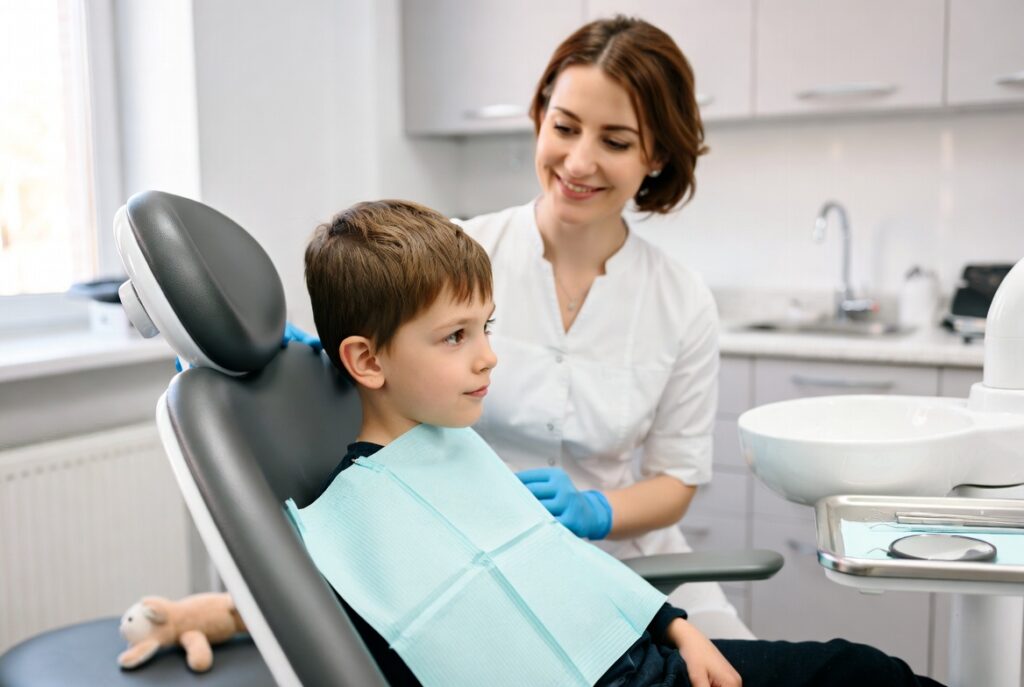
Visiting a dentist can be a scary experience for many children. The waiting room, sounds, and feeling of not knowing what is going to happen may create feelings of anxiety before even going in for their appointment. If this fear is not handled early, it may result in children not wanting to go to the dentist at all. Gentle techniques for fear-free dentistry for children make this process a much calmer, supportive, and reassuring experience. This blog explains such techniques for reducing the fear of dentistry in children.
Understanding Dental Fear in Children
Most children have anxiety from unknowns (not knowing what will happen), feeling out of control, or having had negative past experiences. Anxiety about going to the dentist can also come from stories told by others, seeing unfamiliar dental tools, etc.
Emotional and Developmental Factors
The emotional and developmental factors play a significant role in how kids experience being at a dental appointment based on their age and personality. Younger children may not have a good idea of what is going on, but may be fearful of the unknown. They may think a procedure will hurt them. Although older children may recognize that some procedure, like a filling, will be uncomfortable at some level, their experiences will be more complex.
These emotional and developmental differences are what allow dental personnel to personalize their approach for all age groups of children. A thorough understanding of each child allows for gentle dental care, greatly reducing the likelihood of needing Denver Dental Implants in the future.
Creating a Welcoming Environment
A child’s experience through a dental office is strongly influenced by how it feels. A relaxing, pleasant dental office atmosphere allows the basis for fear-free dentistry for children, as by minimizing the child’s stress before even having any dental work. Because children are especially attracted to their physical environment, a nurturing atmosphere will have a positive impact on their overall comfort level.
The Role of Familiarity and Comfort
A warm welcome, a cordial speaking voice, and a space that is child-friendly ensure fear-free dentistry for children. It creates a trustworthy relationship among children. Creating an environment in which children feel acknowledged and respected will increase their willingness to cooperate during the visit.
The presence of a parent or caregiver can also help to establish confidence and calmness in a child, allowing for fear-free dentistry for children, particularly through their first few appointments. Positive early experiences will influence the child to be more agreeable to receiving potential future cosmetic dentistry procedures for enhancing their dental care.
Role of Communication Techniques in Fear-Free Dentistry for Children
Properly communicating with children can be an incredibly impactful way to create fear-free dentistry for children. The way that you communicate with the child could greatly impact how they react to the experience you are providing. Having a clear and gentle communication with the child will allow them to eliminate any uncertainty.
Using Age-Appropriate Language
Dentists tend to use very simple and positive terminology to explain various dental procedures for kids to ensure fear-free dentistry for children. This will create a comfortable environment for the child. For instance, dental cleaning can be explained to the child as making their teeth sparkle. It is important for you to make your child understand what is going to happen during the procedure to ensure safe, fear-free dentistry for children.
Encouraging Questions and Participation
Encouraging children to ask questions and to be involved in the process helps to give them a higher degree of self-confidence. It reduced the higher levels of stress in them by providing the basis for fear-free dentistry for children. This reduction of fear allows a child to plan for having other cosmetic dentistry options, such as teeth whitening, later in life.
The Tell Show Do Approach
The Tell, Show, and Do (TSD) Approach is one of many techniques used in pediatric dentistry to gradually introduce children to dental procedures in a friendly manner. It reduces dental anxiety and ensures fear-free dentistry for children.
In this approach, first, the dentist will tell the child what is going to happen during a procedure, followed by showing him or her, through the use of basic instruments or tools, etc., how to perform the procedure, and finally, the dentist will complete the procedure.
The TSD approach is intended to reduce the emotional anxiety that can occur when a child is exposed to new experiences. If a child can see and understand each step of a procedure, he/she will experience less anxiety and form the basis for fear-free dentistry for children.
In addition, in some practices, gentle, non-threatening instruments associated with laser dentistry may be introduced to children.
Gentle Behavioral Guidance
Gentle behavioral guidance techniques can help children stay calm and cooperative while they are in the dental office. Rather than using control or force to get cooperation, gentle behavioral guidance utilizes positive reinforcement as a means to achieve success in behavioral guidance.
Praising a child for cooperating will assist with the development of confidence in a child. Moreover, the attitude conveyed by a dental team also contributes to how the child will perceive their dental visit. A calm behavior of professionals will make the child become friendly to them and allow for fear-free dentistry for children.
Pain Management and Comfort Measures
It’s essential that your child feels physically comfortable, as much as it is for them to feel emotionally cared for. Gentle dental techniques for fear-free dentistry for children focus on minimising discomfort for children while undergoing dental procedures. When children are comfortable physically during dental treatment, it enhances their overall experience at the dentist.
Use of Modern Technology
New technologies in fear-free dentistry for children have made it easier to treat patients. There are precise and efficient tools available to dentists that reduce both the time and stress of treatment, improving outcomes and providing the opportunity for your child to feel relaxed. Therefore, it reduces the chance of requiring orthodontic care in the future because of untreated issues.
The Importance of Parental Involvement
Parents should prepare their child at home before coming in for their appointment with the dentist. It makes a child feel less anxious about visiting the dentist, i,e., allowing fear-free dentistry for children. Discussing what will take place during the visit, reading books about going to the dentist, and sharing any past positive experiences at the dentist will help prepare their mind for the visit.
Conclusion
Dental visits are necessary yet important for children as for adults. Parents should train their children for dental visits early on to form the basis of fear-free dentistry for children. It helps promote dental healthcare for the long term. Including the aforementioned gentle techniques for fear-free dentistry for children in regular routine will help promote healthy well-being. You can have further consultation from professionals at Broadway Family Dentists.