









Most people brush their teeth every day. Many also floss when they remember. But there is one small area that often gets missed: the tight spaces between teeth, around the gumline, under bridges, beside implants, and around braces.
That is where interdental brushes can make a real difference.
These tiny brushes are designed to clean the spaces a regular toothbrush cannot reach. Used correctly, they can help remove trapped food, disturb plaque before it hardens, and make your mouth feel cleaner between dental visits. For many patients, they are also easier to use than string floss, especially when there are wider gaps, dental work, orthodontic appliances, or limited hand movement.
Here is how they work, when they help most, and how to choose the right one for your daily routine.
What Are Interdental Brushes?
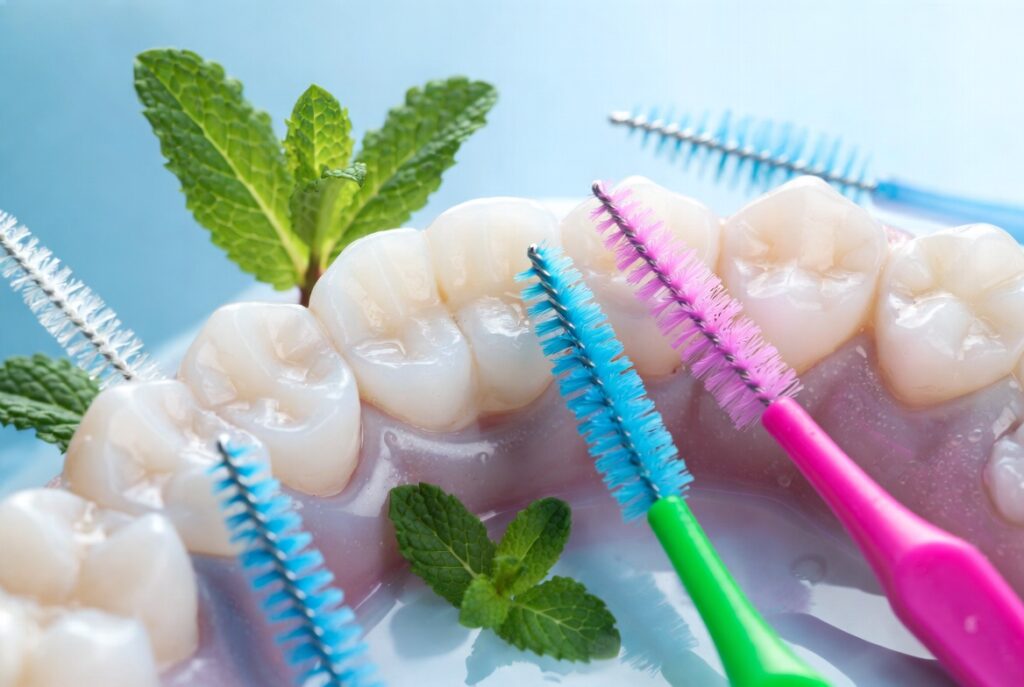
Interdental brushes are small, narrow cleaning tools made to fit between teeth. They usually have a thin wire or flexible core with soft bristles around it. Some look like tiny bottle brushes, while others have angled handles for easier access to back teeth.
The purpose is simple: to clean between teeth where a regular toothbrush cannot reach.
A normal toothbrush help to clean the front, back and chewing surfaces. It can not fully clean the areas between teeth or the small spaces near the gumline. Over time, plaque can collect there. If plaque is not removed, it may contribute to gum irritation, bad breath, tartar buildup, cavities, and early gum disease.
An interdental brush helps by gently sweeping through those spaces.
You may benefit from one if you have:
- Small gaps between teeth
- Gum recession or “black triangles”
- Dental implants, crowns, or bridges
- Braces or orthodontic wires
- Food that often gets stuck between teeth
- Bleeding gums when cleaning between teeth
- Difficulty using traditional floss
They are not meant to replace brushing. They are meant to complete the routine.
Why Cleaning Between Teeth Matters?
Plaque is not just a surface problem. It forms in thin, sticky layers around the teeth and gumline. Some of the most stubborn plaque collects in places you cannot see well, especially between teeth.
One practical way to think about it is this: brushing without cleaning between teeth is like washing only the outside of a glass and ignoring the rim. The visible part looks clean, but buildup can still remain in the hidden areas.
Daily interdental cleaning can help:
- Remove food particles before they sit overnight
- Reduce plaque between teeth
- Freshen breath by cleaning trapped debris
- Support healthier gums
- Make professional cleanings easier
- Help protect dental work such as implants, crowns, and bridges
For patients visiting general dentistry appointments, this is often one of the easiest habits to improve at home. It requires the right-sized brush, a gentle technique, and consistency rather than complicated routine.
Interdental Brush vs Floss: Which One Is Better?
Interdental brush vs floss is a common question that comes up often. Actually, it depends on your teeth.
Floss is excellent for tight contacts where teeth sit very close together. Interdental brushes are often better for wider spaces, gum recession, braces, bridges, implants, and areas where floss feels awkward or ineffective.
Here is a simple comparison.
| Cleaning Tool | Best For | Main Advantage | Possible Limitation |
| String floss | Tight spaces between teeth | Slides through narrow contacts | Can be hard to use correctly |
| Interdental brush | Wider gaps, braces, implants, bridges | Easier grip and better debris removal in open spaces | Must be sized correctly |
| Floss pick | Quick cleaning on the go | Convenient and simple | Less precise than string floss |
| Water flosser | Braces, implants, sensitive gums | Gentle flushing action | Does not always replace physical plaque removal |
| Soft picks | Mild daily cleaning between teeth | Comfortable and travel-friendly | Less effective for larger buildup |
A better approach is not to ask which tool is “best” for everyone. Ask which tool fits your mouth.
Some people need floss for the tight front teeth and an interdental brush for the back teeth. Others use a water flosser at night and a small interdental brush around implants or bridges. Your dentist or hygienist can show you the safest combination during a routine visit.
How Interdental Brushes Improve Daily Oral Care
Interdental brushes improve oral care by making hidden areas easier to clean. Instead of relying only on a thin piece of floss, you use a small brush that physically contacts the sides of the teeth and the gumline area.
They Reach Areas a Toothbrush Misses
Even excellent brushing cannot clean every surface. Toothbrush bristles are too large to fully enter the spaces between teeth.
An interdental brush is designed for those narrow spaces. When it fits properly, the bristles gently touch the tooth surfaces and help loosen plaque and food particles.
This is especially useful near the gumline, where plaque can sit unnoticed.
They Can Be Easier Than Floss
Many people dislike flossing because it feels awkward. It may shred, snap, or be difficult to guide around back teeth. Some patients also press too hard, which irritates the gums.
An interdental brush has a handle, which makes it easier to control. For older adults, people with arthritis, or anyone who struggles with finger dexterity, this can make daily cleaning more realistic.
The best oral care habit is the one you can actually keep.
They Help with Dental Implants and Bridges
Implants and bridges need careful daily cleaning. Food and plaque can collect around the edges of restorations, especially where the gum meets the dental work.
For patients exploring Denver dental implants, home care is part of long-term success. A dentist may recommend coated interdental brushes around implants because they are designed to clean without scratching the implant surface.
This should be personalized. Do not force a brush around an implant or bridge if it feels too tight. Ask your dental team which size and style is safest.
They Support Cosmetic Dental Results
A bright smile is not only about whitening or veneers. Healthy gums make cosmetic results look better and last longer.
If plaque accumulates between the teeth, the gums can become red, swollen, or irritated. That can affect the appearance of the smile, even if the teeth are straight and white.
Patients considering cosmetic dentistry often focus on color, shape, and symmetry. Daily cleaning between teeth supports the foundation behind those improvements: clean teeth and healthy gum tissue.
Who Should Consider Interdental Brushes?
Not everyone needs the same tool, but many people can benefit from trying an interdental brush.
You may be a good candidate if your dentist has mentioned:
- Early gum inflammation
- Food trapping between specific teeth
- Gum recession
- Bone loss around certain teeth
- Larger spaces between teeth
- Orthodontic appliances
- Dental implants or bridges
- Difficulty flossing consistently
Interdental brushes can also help patients who feel they “brush well” but still notice bleeding when flossing. Bleeding can happen for several reasons, including gum inflammation or aggressive technique. If it continues, schedule a dental evaluation instead of ignoring it.
Interdental Brushes for Braces
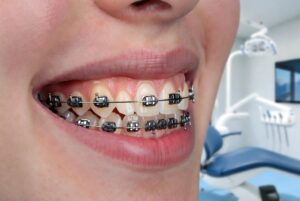
Braces create more places for food and plaque to hide. Brackets, wires, and bands can make normal brushing and flossing harder. This is why interdental brushes for braces are so useful.
They can help clean:
- Around brackets
- Under archwires
- Between teeth where space allows
- Near the gumline
- Behind back molars
- Around orthodontic appliances
A small angled interdental brush is often easier to move around braces than a straight one. Use gentle pressure and avoid forcing the brush under wires. If the bristles bend too much or the wire feels sharp, the size may be wrong.
Patients receiving orthodontic care should ask for a demonstration. One minute of in-office instruction can prevent weeks of poor technique at home.
How to Choose the Right Size
Size matters more than brand.
An interdental brush should feel snug, but not tight. The bristles should touch the sides of the teeth, while the core should pass through without force.
If it slides through with no contact, it is too small. If it bends, hurts, or will not enter the space easily, it is too large.
A Simple Sizing Guide
Use this as a starting point:
- Very tight spaces: floss may be better
- Small gaps: extra-small interdental brush
- Moderate gaps: small or medium brush
- Larger spaces: medium or large brush
- Braces: small angled brush
- Implants or bridges: dentist-recommended coated brush
Many people need more than one size. The front teeth may need a smaller brush, while the back teeth or spaces near dental work may need a larger one.
How to Use an Interdental Brush Safely
Good technique is gentle and simple.
Follow these steps:
- Brush your teeth first or clean between teeth first; either order can work if you are thorough.
- Choose the correct brush size for the space
- Gently insert the brush between teeth, near the gumline
- Move it back and forth a few times
- Do not twist aggressively
- Rinse the brush during use if debris collects
- Change the brush when the bristles look worn or bent
- Never force it into a tight space
For back teeth, an angled handle can help. Some brushes also allow you to bend the neck slightly for better access.
One practical tip: start with the areas where food gets stuck most often. Once the habit becomes easy, expand to the rest of the mouth.
Common Mistakes to Avoid
Interdental brushes are simple, but technique still matters.
Mistake 1: Forcing the Brush
If the brush does not slide in gently, stop. Forcing it can irritate the gums or damage delicate tissue. Use a smaller size or floss instead.
Mistake 2: Using One Size Everywhere
Your mouth is not the same size everywhere. Different spaces may need different brushes.
Mistake 3: Scrubbing Too Hard
This is not a cleaning brush for tile. Use light pressure. The goal is to disturb plaque, not scrape the gums.
Mistake 4: Reusing a Worn Brush Too Long
A bent or frayed brush does not clean as well. It can also feel uncomfortable. Replace it when it loses shape.
Mistake 5: Ignoring Bleeding
A little bleeding may happen when you start cleaning areas that have been missed. But bleeding that continues, worsens, or comes with swelling should be checked by a dentist.
Expert Recommendation: Make It Part of a Realistic Routine
The best routine is not the most complicated one. It is the one you can repeat.
For many Denver patients, a realistic daily plan looks like this:
- Brush twice daily with fluoride toothpaste
- Clean between teeth once daily
- Use an interdental brush where it fits comfortably
- Use floss in tight areas
- Rinse after meals when brushing is not possible
- Schedule regular cleanings and exams
If you are preparing for teeth whitening, it is smart to improve plaque control first. Cleaner teeth and healthier gums help the whitening treatment look more even and polished.
If you have gum sensitivity or dental anxiety, ask whether technology-assisted options such as laser dentistry may be appropriate for certain treatments. The right recommendation depends on your exam, diagnosis, and comfort level.
A Practical Example
Imagine a patient in Denver who brushes every morning and night but keeps getting food stuck near the lower molars. Floss feels tight in the front and awkward in the back. During a cleaning, the hygienist notices mild gum bleeding between the molars and recommends a small interdental brush for that specific area.
The patient starts using it every night after brushing. It takes less than one minute. After a few weeks, the area feels cleaner, food trapping becomes less annoying, and the gums bleed less during cleaning.
That is the real value of an interdental brush. It simply solves a specific daily problem.
It is not about adding more products to your bathroom drawer. It is about using the right tool for the areas your toothbrush keeps missing.
When to Ask a Dentist Before Using One
Most people can use interdental brushes safely, but professional guidance is helpful if you have dental work or gum concerns.
Ask your dentist first if you have:
- Dental implants
- A fixed bridge
- Recent gum surgery
- Active gum disease
- Pain between teeth
- Loose teeth
- Significant gum recession
- Braces or retainers
- Bleeding that does not improve
Patients with implants and veneers should be especially careful. The goal is to clean effectively without damaging restorations or irritating the gum tissue around them.
What Broadway Family Dentists Look For During a Visit
At Broadway Family Dentists in Denver, daily home care is not treated as an afterthought. It is part of the bigger picture.
During a dental visit, the team may evaluate your teeth, gums, bite, restorations, and areas where plaque tends to collect. From there, they can explain which tools fit your mouth and how to use them correctly.
A typical care process may include:
- Consultation and oral evaluation
- Review of concerns such as bleeding, sensitivity, or food trapping
- Personalized treatment planning when needed
- Preventive cleaning and home-care guidance
- Follow-up recommendations based on your oral health
For patients without insurance, Broadway Family Dentistry & Implants lists no-insurance exam and X-ray offers on its website. Pricing and availability can change, so patients should confirm current details directly with the office before scheduling.
This type of guidance matters because interdental cleaning is not one-size-fits-all. A brush that works beautifully for one patient may be wrong for another.
Quick Daily Checklist
Use this checklist to make interdental brushes part of your routine:
- Choose the correct size
- Use gentle pressure
- Clean once daily
- Focus on areas where food gets stuck
- Do not force the brush
- Replace worn brushes
- Use floss for tight spaces
- Ask your dentist about implants, bridges, or braces
- Schedule regular dental cleanings
- Watch for bleeding, swelling, or pain
Small habits are easier to keep when they feel specific. Start with one problem area, then build from there.
Do Interdental Brushes Replace Floss?
Sometimes they can. Sometimes they cannot.
If your teeth are very close together, floss may still be the better tool. If you have wider spaces, braces, implants, bridges, or gum recession, an interdental brush may clean more comfortably and effectively.
Many patients do best with both. Floss can clean tight contacts, while interdental brushes can clean open spaces and dental work.
The smartest answer is personalized. Ask your dentist or hygienist to check your spacing and recommend the right tool.
A Cleaner Routine Starts Between the Teeth
Interdental brushes are small, but they can change how clean your mouth feels every day. They help reach the areas brushing misses, make cleaning easier for many patients, and support healthier gums when used correctly.
The key is fit, technique, and consistency. Do not force them. Do not guess forever. Get guidance, use the right size, and make the habit simple enough to repeat.
For patients in or near Denver seeking healthier gums, cleaner teeth, and greater confidence in their daily routine, personalized preventive care starts with Broadway Family Dentists.