










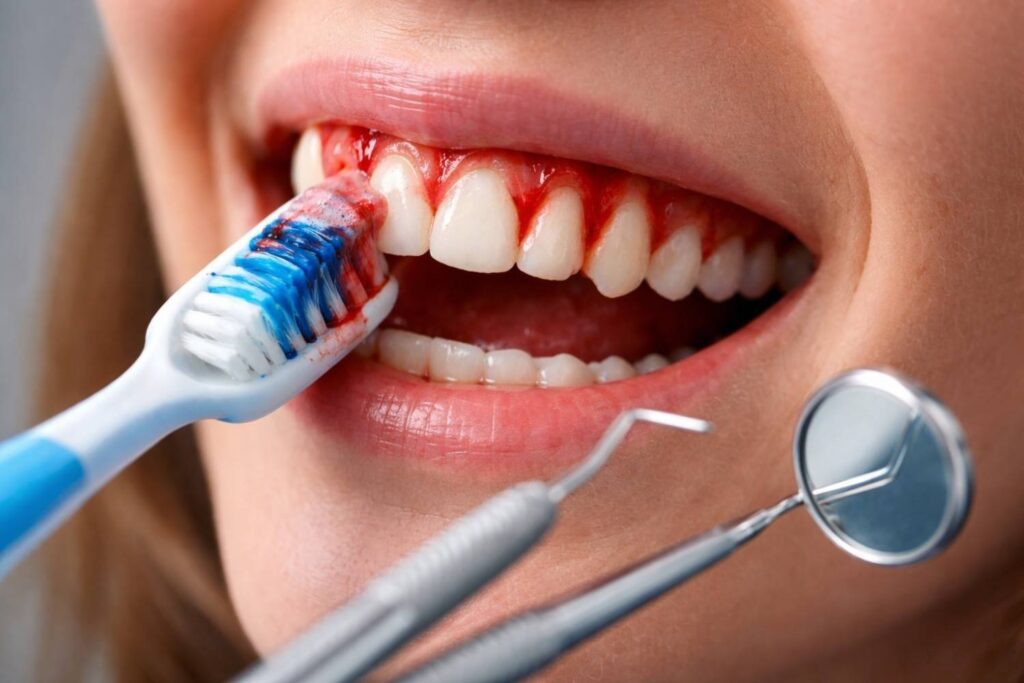
Bleeding gums are one of the most common dental concerns patients notice at home. It often starts as a small amount of pink in the sink when brushing or flossing, but it should never be ignored. While occasional mild bleeding can happen, persistent gums bleed is usually a sign that something deeper is going on in your oral health.
At Broadway Family Dentistry & Implants in Denver, we help patients identify the cause of bleeding gums early before it develops into gum disease, infection, or tooth loss. This blog will explain why gums bleed, what it means for your health, and when you should see a dentist.
What Does It Mean When Your Gums Bleed?
Healthy gums do not bleed during normal brushing or flossing. If bleeding occurs, it usually means the gums are inflamed, irritated, or infected. The most common medical term for this early stage is gingivitis, which is the first stage of gum disease. At this stage, the condition is reversible but only with proper care.
Main Causes of Bleeding Gums
1. Plaque buildup (most common cause)
Plaque is a sticky layer of bacteria that forms on teeth every day. If not removed properly, it irritates the gums and causes bleeding.
2. Gingivitis (early gum disease)
Gingivitis causes:
- Red, swollen gums
- Bleeding when brushing or flossing
- Mild tenderness
- Bad breath
It is reversible with professional cleaning and improved oral hygiene.
3. Brushing too hard
Using a hard toothbrush or brushing too aggressively can damage gum tissue and cause bleeding.
4. Flossing irregularly
If you don’t floss regularly, your gums may bleed when you start again. This usually improves within a few days.
5. Tartar buildup
When plaque hardens into tartar, it cannot be removed at home. It causes ongoing irritation and requires professional cleaning.
6. Hormonal changes
Pregnancy, puberty, or hormonal shifts can make gums more sensitive and likely to bleed.
7. Medical conditions or medications
Some conditions and medications can increase the risk of gum bleeding, including blood thinners and vitamin deficiencies.
When Bleeding Gums Become a Serious Problem
Bleeding gums should be taken seriously if you notice:
- Bleeding every time you brush or floss
- Swollen or receding gums
- Persistent bad breath
- Loose teeth
- Gum pain or sensitivity
- Pus around teeth or gums
- Teeth feeling “longer” than before
These may be signs of periodontitis, an advanced gum disease that can damage bone and lead to tooth loss if untreated.
What Happens If Gum Disease Is Not Treated?
Untreated gum disease can lead to:
- Permanent gum recession
- Bone loss around teeth
- Loose teeth
- Tooth loss
- Chronic infection
- Increased risk of other health problems
The earlier it is treated, the easier it is to control.
How Dentists Treat Bleeding Gums
Treatment depends on severity:
Mild cases:
- Professional dental cleaning
- Improved brushing and flossing technique
- Antibacterial mouth rinses
Moderate to advanced cases:
- Deep cleaning (scaling and root planing)
- Periodontal treatment
- Ongoing maintenance cleanings
The goal is to remove bacteria below the gum line and allow the gums to heal.
How You Can Stop Gum Bleeding at Home
You can improve gum health by:
- Brushing twice daily with a soft toothbrush
- Flossing gently every day
- Using fluoride toothpaste
- Avoiding smoking
- Drinking plenty of water
- Eating a balanced diet
However, home care alone cannot remove hardened tartar that requires professional cleaning.
How Long Does It Take for Gums to Heal?
- Mild gingivitis: 7–14 days with proper care
- Moderate inflammation: a few weeks
- Advanced gum disease: requires ongoing treatment
Healing depends on early intervention and consistency.
When You Should See a Dentist Immediately
Book a dental visit if:
- Bleeding lasts more than 1 week
- Gums are swollen or painful
- You notice loose teeth
- You have persistent bad breath
- You haven’t had a cleaning in over 6 months
Early treatment prevents permanent damage.
Final Message
Bleeding gums are common, but they are not normal. They are your body’s early warning sign that bacteria are affecting your gum health. The sooner you act, the easier it is to reverse the damage and protect your smile. If you are noticing bleeding gums or other symptoms, Broadway Family Dentists can evaluate your gum health and recommend the right treatment for your needs.