




You lose a tooth. Now you want a straight answer on price. Here it is. A single dental implant in the Denver metro costs about $3,100 to $5,800 all-in. A full-arch replacement costs $24,000 to $50,000 per arch. Denver sits a little above the national average. Local clinics report a citywide cash price near $4,300 per implant.
Maybe you compare an implant against a bridge or denture. Maybe a quote left you confused. This guide answers both. It shows where your money goes. It also flags the costs that cheap quotes hide.
The Three Parts You Actually Buy
A dental implant is not one item. It is three. You protect yourself the moment you understand that.
According to Denver dental implants, the implant post is the titanium screw that goes into your jawbone. It costs roughly $1,000 to $3,000. You usually see this number in “$999 implant” ads. The abutment connects the post and tooth. It adds about $400 to $1,000. The crown is the visible porcelain tooth you chew with. It runs $800 to $3,000, based on the material.
Add these three parts together. You reach the $3,000-$6,000 range for a real, working tooth. A Real Dental Costs breakdown, built on ADA and FAIR Health fee data, confirms this structure. That is why an honest quote never matches the post-only ad price.
Denver prices sit near the top of the national range. A survey of 245 local clinics puts the average cash price at $4,300 per implant. That figure runs about 5% below the wider Colorado average. It still lands above the U.S. midpoint. Metro overhead, rent, and demand all push the number higher.
The Extra Fees That Catch People Off Guard
This is where many Denver patients get surprised. The package price rarely covers the prep work. And prep work is common.
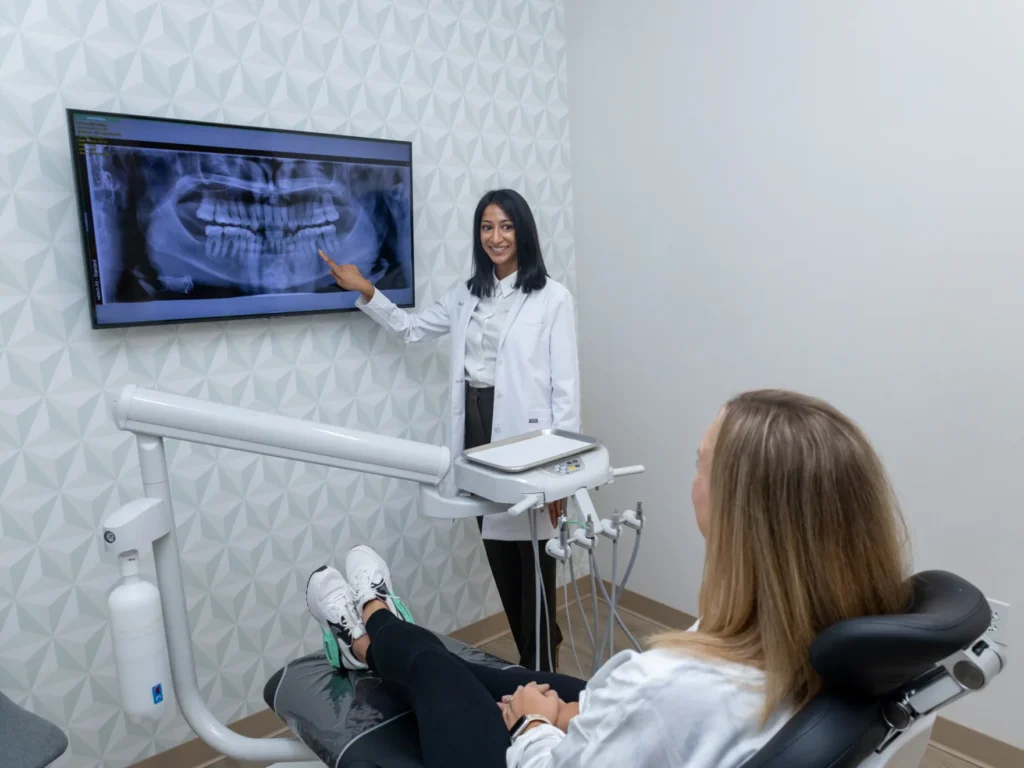
Before placement, you may need a tooth extraction. That costs $ 65 to $ 750. You also need a 3D CT scan and a consultation, which run $100 to $300. The big one is the bone graft. You need it when your jaw lacks the density to hold the screw. A graft adds $300 to $3,000. It also adds three to six months of healing. Some upper-jaw implants require a sinus lift, and that costs more on top of it.
Picture two real Denver cases. In the first, you replace a lower premolar with healthy bone. The price stays near the base $3,100 to $4,000. The timeline runs about three months. In the second, you replace an upper front tooth. You already have bone loss. You need a graft and a sinus lift. Now the bill passes $7,000 easily. The timeline stretches to six or seven months. Same “single implant,” very different total.
The mistake that costs people thousands: You accept a lump-sum quote with no itemized breakdown. An office says “implants from $2,999” but hides the details. Treat that as a warning sign. Instead, you book consultations with two or three providers. You ask each one a direct question: does this price include the crown and the scan? Many Denver offices offer free or low-cost consultations. So you compare prices for almost nothing but your time.
Single Tooth vs. Full Set: The Real Math
You replace more than one tooth, and the math changes. Individual implants across a whole arch get expensive fast. Full-arch systems like All-on-4 use just four implants to anchor a full set. That is why they save money for heavy tooth loss.
| Treatment | Denver Cost Range | Best For |
| Single implant (post + abutment + crown) | $3,100–$5,800 | One missing tooth |
| Implant-supported bridge (2–4 teeth) | $6,000–$15,000 | A few side-by-side gaps |
| Full-arch / All-on-4 (per arch) | $24,000–$50,000 | A full upper or lower set |
Durability tips the scale toward implants. A dental bridge often needs to be replaced after every 5 to 15 years. Implants last decades with good care. The Cleveland Clinic reports high implant success rates. One Spear Education figure, cited by Denver providers, estimates that the average person who reaches age 85 spends over $95,000 on dental care over a lifetime. That number reframes an implant as a long-term investment rather than a splurge.
Still, implants do not suit everyone. Uncontrolled diabetes, heavy smoking, or untreated gum disease change your candidacy and your cost. In those cases, a bridge or partial denture often serves you better for now.
Insurance, Financing, and Smart Ways to Save
Most dental plans cover implants in part. They rarely exclude them outright. Many plans now pay about 50% of the cost up to your annual maximum. That cap usually falls between $1,000 and $2,500. It does not cover a full implant. It does offset the crown, though. So it often cuts your out-of-pocket cost by $800 to $1,500. Medical insurance sometimes helps when an accident causes the tooth loss.
You make one smart move first. You request a pre-treatment estimate from your insurer before you schedule. That step gives you a real number instead of a guess. Beyond insurance, most Denver practices accept CareCredit, in-house payment plans, and HSA or FSA dollars. If you have no coverage, local dental school clinics and Donated Dental Services programs offer reduced rates. Seniors and veterans qualify most often.
What a Specialist Tells a Friend
You replace one tooth and you have decent bone. Budget $4,000 to $5,000 in Denver. Skip the cheapest ad. Placement precision and materials show their value years later. You face a full arch instead. Get two full-arch quotes. Ask what the temporary and final teeth cost, because full-arch prices split most on that line. And whatever you pay, remember one truth. Daily plaque control around the implant decides whether it lasts 25 years or fails by year five. The brand of screw matters far less.
Get a Real Number for Your Own Mouth
Every range above helps you plan. None of it is a quote. Your real cost depends on a 3D scan, your bone, your tooth position, and your insurance. The team at Broadway Family Dentists gives you an itemized estimate after imaging. So you know exactly what you pay before you commit. Bring any earlier quotes with you. Ask for the line-by-line breakdown. Then you compare offers fairly, side by side.
Missing teeth never get cheaper to fix. You wait, and bone loss and shifting teeth make future work harder. So you price it out now, even if you finance the treatment later. That choice protects both your smile and your budget.