








A child should have their initial dental appointment by their first birthday or once their very first tooth emerges.
The appointment is usually preventive: the dentist checks tooth and jaw development, looks for early decay and shows you how to care for your child’s mouth at home. The American Dental Association and American Academy of Pediatric Dentistry both support establishing dental care by age one.
Do not wait for tooth pain or a visible cavity. Early appointments are designed to prevent problems, answer feeding and brushing questions and help your child become comfortable in a dental setting.
When to Schedule the First Dental Visit for a Child
Schedule your child’s first dental visit by their first birthday or within six months after their first tooth appears, whichever milestone occurs first. A baby with two small lower teeth still benefits from an examination because decay can begin as soon as teeth erupt.
The age-one recommendation can feel surprisingly early, especially to parents who remember having their own first appointment at age three or four. Yet the first visit is less about performing extensive treatment and more about creating a prevention plan before feeding, brushing or enamel problems become harder to manage.
Recent CDC findings show that approximately 11% of children ages two through five have untreated decay in at least one baby tooth. Starting care before this age gives parents an opportunity to identify individual risk factors and correct daily habits early.
Should You Book Earlier Than Age One?
Contact a dentist sooner when you notice white, brown or black areas on a tooth, gum swelling, a chipped tooth, persistent mouth discomfort or difficulty eating. An earlier evaluation may also be appropriate when a child was born prematurely, has enamel defects, takes medications that cause dry mouth or frequently falls asleep with milk or another sugary drink.
Dental injuries should not wait for a routine appointment. The Denver office advertises same-day and emergency appointments, although parents should call ahead to confirm availability and whether a pediatric provider is on-site that day.
What Actually Happens During the Appointment?
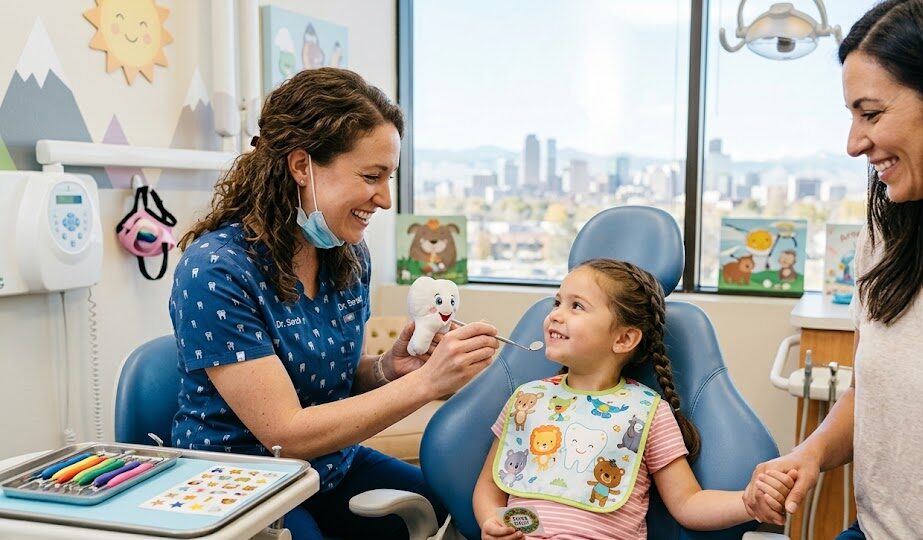
A first visit is normally kept simple so the dentist can examine the child without creating unnecessary stress. Depending on the child’s age and comfort level, the parent may sit in the dental chair with the child on their lap.
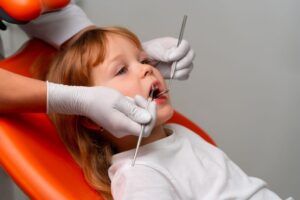
The dentist typically counts the teeth and examines the gums, tongue, bite and visible tooth surfaces. They may also check whether the jaw and teeth appear to be developing normally and look for signs of injury, plaque or early cavities. The ADA describes cleaning and daily-care guidance as common parts of the first appointment.
X-Rays Are Based on Need, Not Age Alone
During a child’s initial dental checkup, X-rays are not standard procedure. The decision depends on what the dentist can see, the child’s symptoms, spacing between the teeth, previous dental records and cavity risk.
The ADA recommends ordering dental X-rays only when they are necessary for diagnosis or treatment. Imaging schedules should be individualized according to age, oral health, symptoms and disease risk rather than applied routinely to every child.
Expect Questions About Everyday Habits
The dental team may ask about:
- Bottle, breastfeeding and sippy-cup habits
- Juice, snacks and nighttime feeding
- Thumb-sucking or pacifier use
- Toothbrushing and toothpaste
- Teething symptoms
- Previous falls or mouth injuries
- Family history of frequent cavities
These questions help the dentist estimate the child’s risk and give advice that fits the family’s routine. A toddler who drinks only water between meals, for example, may need different guidance from a toddler who carries a cup of diluted juice throughout the day.
Make the First Appointment Easier for Your Child
Choose a time when your child is normally awake, rested and cooperative. Avoid naptime and consider a morning appointment if your toddler becomes tired or irritable later in the day. Give the child a light meal beforehand, brush their teeth and save snacks until after the examination. These preparation steps are also recommended in the ADA’s parent guidance.
Use calm, simple language. Tell your child that the dentist will “count your teeth” or “help keep your mouth healthy.” Avoid describing needles, drilling or pain when no such procedure has been planned. Even a reassuring statement such as “It won’t hurt” can introduce a fear the child had not considered.
A Realistic First-Visit Scenario
Imagine an 11-month-old with four front teeth who still falls asleep while nursing. During the visit, the child sits on a parent’s lap while the dentist performs a quick visual examination. No X-rays are needed because the teeth are spaced, clearly visible and show no signs of decay.
The parent receives practical advice on cleaning teeth before bedtime, reducing prolonged overnight exposure, and using the correct amount of fluoride toothpaste. The appointment may be brief, but it changes the child’s cavity risk by improving what happens at home every night.
Crying or wiggling does not mean the visit has failed. Both are normal reactions to an unfamiliar room, light and examination. The goal is not perfect behavior; it is to complete an appropriate evaluation while protecting the child’s trust.
Build a Tooth-Care Routine That Fits Their Age
Begin brushing as soon as the first tooth erupts. For children younger than three, the AAPD recommends a tiny smear approximately the size of a grain of rice of fluoride toothpaste twice daily. Children ages three through six should use no more than a pea-sized amount, with an adult brushing or providing close assistance.
Young children generally cannot clean every tooth effectively on their own. Letting them hold the toothbrush can build independence, but a parent should finish the job. Pay particular attention to the gumline, the backs of the front teeth and the grooves of the back teeth as they erupt.
Baby teeth deserve the same attention as permanent teeth. They help children chew and speak and guide permanent teeth into their developing positions. Losing one too early because of severe decay can affect eating, comfort and the space available for the adult tooth.
What Happens After the First Visit?
Many children are seen approximately every six months, but the interval should reflect the child’s needs. A child with active decay, enamel weakness or high-risk feeding habits may require closer monitoring, while another child may remain on a standard preventive schedule. The AAPD advises families to follow the individualized interval recommended by their pediatric dentist.
Possible future services include preventive examinations, professional cleaning, fluoride treatment, cavity care, monitoring of tooth and jaw development and guidance for dental anxiety. The Denver practice lists pediatric dentistry among its specialty services and states that it provides early cavity care and monitoring of tooth, bite and jaw development.
Insurance, Self-Pay Pricing and Denver Appointment Details
The office states that it accepts most or major insurance plans and offers flexible financing options. Because pediatric benefits, deductibles, fluoride coverage and X-ray frequency limits vary by plan, parents should verify coverage before the appointment rather than assuming every preventive service will be fully paid.
The website currently advertises a $99 exam and X-rays offer for patients without insurance and a $79 limited exam and X-rays offer. However, its published disclaimer says the promotion is not valid for appointments with a pediatric dentist. Ask the office for the expected pediatric self-pay fee and any membership-plan options before booking.
The practice is located at 1573 S. Broadway, Denver, CO 80210. Published office hours are Tuesday through Friday from 8:00 a.m. to 5:00 p.m., with Saturday, Sunday and Monday listed as closed. Walk-ins, same-day visits and emergency appointments are advertised, but scheduled pediatric availability should be confirmed directly.
Give Your Child a Healthy Start Before Problems Appear
The best first appointment is usually one made before anything hurts. By age one, parents can receive specific guidance on brushing, fluoride, feeding habits, teething, and cavity risk, while the child begins to learn that dental visits are a normal part of growing up.
For Denver families ready to establish that routine, Broadway Family Dentists offers pediatric care, preventive appointments and access to emergency and same-day scheduling at its South Broadway location. Confirm insurance benefits, pediatric provider availability, and expected charges when arranging the visit.